Peter & Paul Digital

We're a brand
agency that makes
award winning
websites.

Show me.

Brand. Film. Digital. Brand. Film. Digital. Brand. Film. Digital.  Brand. Film. Digital. Brand. Film. Digital. Brand. Film. Digital.

We work across three specialisms – brand, film and digital – and that's important when you’re considering your website. Your site is one part of your communications; it needs to be technically sound but, more than just technical, it should be emotive, effective, and full of good ideas. It should be a place for really good content. Here’s how we do it:

1 —
Your website is only as good as your content... so we create that for you too.

Because we work across all parts of brand communication, the websites that we design and build contain content that we make – a film about what you do, a new way of writing words, a style for photography.

2 —
Interaction + animation = attention.

It's pretty simple. Keep users on the site by making the experience an enjoyable one.

Our online work is like any other piece of our work – it's an extension of an organisation. Your personality, your ethos should all come across. So an online shop should feel like a real shop and a manifesto should be an interactive book.

3 —
Sometimes ‘digital’ doesn’t always mean ‘website’.

How do you communicate through your social channel when everyone's feed is full to bursting? You give a client the opportunity to brand their feed. That was the challenge we were given by Brent 2020 and the solution was to create a mobile web app which enabled them to add graphic frames to any photograph. The result has been a fully branded online presence, from website to Instagram to Facebook.

4 —
Respecting your visitors 'privacy.

The web has become a place of invisible data capture. Once you visit a site, your profile gets spied on without you knowing and passed on to other organisations, some of them using it to sell you stuff. We work to respect privacy, meaning we don't put in tracking cookies unless absolutely necessary.

5 —
Fast. Efficient. Creative.

Now that Google offers a score based on a site's efficiency, we're making our work score highly both on creative and experience.

Our latest site scored 98 out of 100. Making it faster, more user friendly, better on mobile and therefore better for the client.

People.

Our web team is an odd mix. Designers who create beautiful work, planners who have experience on huge websites and developers who are setting the standard for best practice.

Dan Hayes
Senior Digital
Designer
Dan Hayes
Tom Smedley
Creative Developer
Tom Smedley
Lee Davies
Creative Director
Lee Davies
Kat Holland
Operations Director
Kat Holland
Ellie Smith
Account Manager
Ellie Smith

Process.

1 — Kickoff.

This part is where we get an understanding of the size of the site you need and therefore the budget we’ll need to create it. It’s where we ask you what’s not working about your current site (if there is one), what the new site needs to achieve, what functionality is vital, your content management needs and how technical things like hosting will work.

2 — Scope.

With everything we've learned from the meeting, we plot the requirements on a diagram with time and importance on an axis. We do this so we can prioritise what needs creating first, what will demand the most amount of time and therefore what is highest priority to begin thinking about.

3 — Sketch.

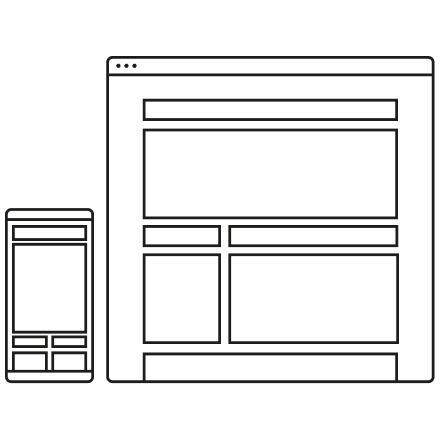
Other people call it ‘wireframing’, but as designers, we call it sketching. We plan out the site in diagramatic form so you can see how the user is taken through the journey, where the most important parts are and how menus work. At this stage we also prototype interactive parts – we test animations, we build little versions of interactions to keep creative thinking a big part of the process.

4 — Design.

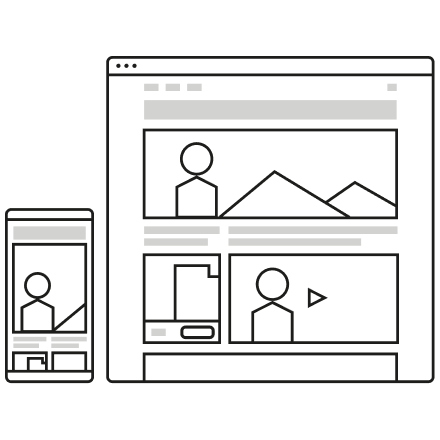
Once the sketches are approved we move into design. Now things get more detailed – colour, type, images, film and graphic design is all defined in this stage. You'll see your final site as a static version of how it will really look. You’ll also start to see responsive designs – how the site will look and feel on mobile and smaller devices.

5 — Build.

The design is approved and now we begin building. Design and development work closely together to ensure everything you’ve seen previously is what is being created on the live site. At this stage we’re also building the content management interface. You’ll see the site at key stages as we send you test links to review.

6 — Test.

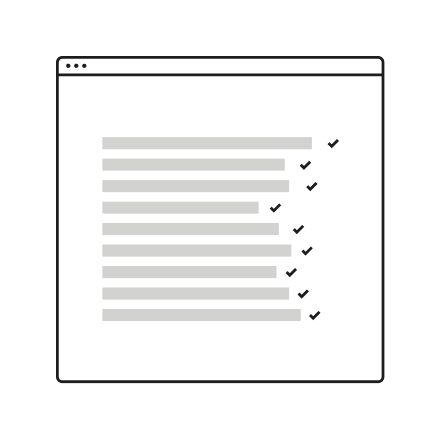
When the site is signed off, we put together a testing plan. We test on browsers and devices – are there any bugs? Is everything we aimed to achieve at the concepting stage being delivered. Can your audience easily navigate on their phone. Are there bugs and workarounds that need to happen before we launch the site? All of these things are covered now.

7 — Launch.

Once signed off, we launch. The site is out in the real world. Once it is, we’re on hand for some immediate after care – just in case you need it. We also like to review the site every 6 months or so to make sure it’s keeping pace with the development of the organisation, if there are any new parts that need adding and so on.

Services
UI.
UX.
E-Commerce.
Content management.
Content creation.
Design.
Build.
Training.
Branding.
Copywriting.
Art direction.
Film direction.
Animation.
Digital Marketing.
Web Apps.
Accessibility.
Strategy.
Ideas.
Focus.

Some people we’ve worked with:

Brand. Film. Digital. Brand. Film. Digital. Brand. Film. Digital.  Brand. Film. Digital. Brand. Film. Digital. Brand. Film. Digital.